


How to Mix Gun Oils Without Ruining Your Firearm
Last Updated: November 15, 2026
Quick Summary
Mixing gun oils usually will not explode or catch fire, but incompatible additives can clump and create a sticky, gummy residue that clogs moving parts and traps fouling. Test a small amount in a glass cup for 24 hours and check for cloudiness, separation, or tackiness before using any blend.
- A fresh mix that turns milky or cloudy is a red flag for incompatibility.
- Let a test mix sit for 24 hours at room temperature before checking it.
- Two products from the same oil family usually blend without drama.
- Clean old oil from the firearm with a full strip and clean before switching products.
- SEAL 1 CLP Plus liquid costs $10.35 and the paste costs $9.85.
Table of Contents
- What Actually Happens When You Mix Gun Oils
- Gun Oil Compatibility: Synthetic vs. Petroleum-Based Formulas
- Cleaning Old Gun Oil From a Firearm Before You Switch
- Too Much Gun Oil on a Gun: The Real Risks
- 3-in-1 Oil for Guns and Other Substitutes to Avoid
- Material Compatibility: What Your Finish and Polymer Parts Tolerate
- Switching to SEAL 1 CLP Plus® the Right Way
- Frequently Asked Questions
What Actually Happens When You Mix Gun Oils
Mixing gun oils sounds harmless. In practice, it can turn your firearm's internals into a sticky, gummy mess. Here is the short answer: most modern gun oils will not explode or catch fire when combined. The real damage comes from chemical reactions that create sludge, clog moving parts, and trap fouling where it does the most harm.
Shooters who have blended products for years often do not think twice about it. Some get away with it. Others end up with a slide that drags or a trigger that feels gritty. The difference usually comes down to what the two formulas are made from.
Additive Clumping and Gummy Residue
Additives are the ingredients that give each oil its special traits. One product may use a detergent to lift carbon. Another may rely on a dispersant to keep particles suspended. A third may add a corrosion inhibitor for rust prevention.
When incompatible additives meet, they can fall out of suspension. The result is a tacky film that grabs dust, unburned powder, and metal shavings. Over time, that film hardens into a gummy residue that slows cycling and increases friction.
Watch out: a thin coat of mixed oil can look fine on the bench and still gum up a recoil spring after a few hundred rounds. If your slide starts feeling sluggish, stop adding oil and clean the action properly. Our guide on avoiding gummed up gun actions walks through the fix step by step.
How to Spot an Incompatible Mix
You do not need a lab to catch a bad blend. A few simple checks will tell you plenty before you commit a product to your firearm.
- Cloudiness: a fresh mix that turns milky or cloudy is a red flag.
- Separation: visible layers or droplets that will not blend signal poor compatibility.
- Tackiness: if the film feels sticky rather than slick after a few minutes, it will likely attract debris.
- Odor change: a sharp or sour smell can point to a reaction between additives.
- Sediment: gritty bits at the bottom of a mixing cup mean solids are dropping out.
A quick compatibility check in a glass cup can flag a bad blend before it reaches your firearm.
| Sign | What it looks like | What it means |
|---|---|---|
| Cloudiness | Fresh mix turns milky or cloudy | Red flag for incompatibility |
| Separation | Visible layers or droplets that will not blend | Poor compatibility |
| Tackiness | Film feels sticky rather than slick after a few minutes | Likely to attract debris |
| Odor change | Sharp or sour smell | Possible reaction between additives |
| Sediment | Gritty bits at the bottom of a mixing cup | Solids are dropping out |
Gun Oil Compatibility: Synthetic vs. Petroleum-Based Formulas
Gun oil compatibility comes down to base stock and additive packages, and the chemistry behind each one explains why some blends fail while others coast along for years. Synthetic oils use lab-made base stocks, typically polyalphaolefin (PAO) or ester-based fluids, with predictable molecular behavior.
The reason is that additives are not universal. Each formulator builds a package around a specific base stock, and those additives are designed to stay dissolved in that chemistry.
Molybdenum disulfide is another common flashpoint. It is a solid lubricant that works well in some greases and oils, but it does not always stay suspended when introduced to a base stock it was not formulated for.
Generally, two products from the same family usually blend without drama. Trouble tends to show up when you cross families or mix a cleaner-lubricant-protectant (CLP) with a straight lubricant, since a CLP carries solvents and detergents a pure lubricant may not be designed to coexist with.
A common approach is to pick one product and stick with it. If you must combine formulas, test a small amount in a glass cup first. Give it a day. Check for cloudiness, separation, or thickening.
Chemical Reaction Testing at Home
You can run a basic compatibility test with items you already have. It takes minutes and costs nothing.
- Put a few drops of each oil into a small glass cup.
- Stir with a clean stick for about thirty seconds.
- Let the mix sit for 24 hours at room temperature.
- Check for layers, cloudiness, or sediment.
- Rub a drop between your fingers and note whether it feels slick or tacky.
If anything looks off, do not use the blend. A mix that separates in a cup will separate inside a firing pin channel, and that is where the trouble compounds.
Cleaning Old Gun Oil From a Firearm Before You Switch
Cleaning old gun oil from a firearm before you switch products is the step most shooters skip, and it is the one that causes the most trouble.
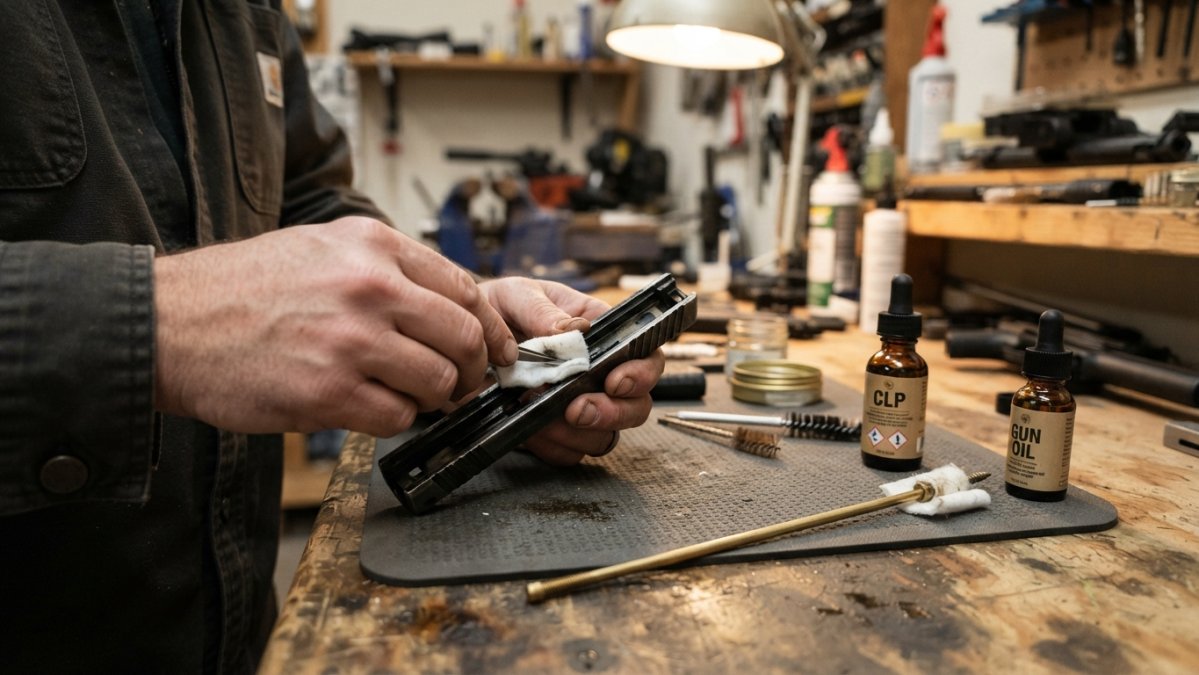
Start with the field-stripped parts. Wipe off as much old oil as you can with a dry cloth. Then apply a solvent or degreaser to cut the remaining film.
A professional-grade strip goes further than most range routines. Work through these steps in order:
- Field-strip and separate. Break the firearm down to its major groups, slide, frame, barrel, recoil spring assembly, and for rifles the bolt carrier group. Do not try to clean around assembled parts.
- Dry-wipe first. Use clean cotton patches or microfiber to remove bulk oil before you introduce any solvent. Solvent on top of heavy oil just dilutes the old film and spreads it around.
- Apply solvent to the high-traffic areas. Slide rails, locking lugs, the bolt carrier group, the firing pin channel, and the extractor recess. Let it dwell for the time the product label specifies, usually a few minutes, so it can lift the old film rather than just wet it.
- Scrub with the right tool. A nylon brush for polymer and finish-safe areas, a bronze brush only where the manufacturer allows it on steel. Avoid steel brushes on aluminum and on any coated finish.
- Run patches until they come out clean. This is the step people rush. Keep running dry patches through the bore and wiping the rails until a patch comes out white or lightly oiled, not gray or tacky.
- Dry fully before re-lubricating. Let the parts air-dry or blow them out with compressed air. A dry surface helps the next product bond to the metal instead of sitting on top of old residue.
- Re-lubricate thin. Apply the new product as a thin film, work it into the rails and contact points, then wipe off the excess.
Watch out: solvent left in a firing pin channel or under an extractor can hydrolock a firing pin or attract fouling just as badly as old oil.
If you are switching because the old product gummed up the action, our guide on avoiding gummed up gun actions walks through the diagnostic side of that problem.
Too Much Gun Oil on a Gun: The Real Risks
Too much gun oil on a gun causes more problems than too little. Excess oil collects fouling, holds grit against metal-to-metal contact, and can seep into places it should not go. In cold weather, heavy oil thickens and slows cycling. In dusty conditions, it turns into a grinding paste.
The old habit of drenching a firearm is outdated. Modern products work as thin films. Apply a few drops, work them in, then wipe off the excess.
- Excess oil traps debris and accelerates mechanical wear.
- Oil in the firing pin channel can cause light strikes in cold weather.
- Over-oiling attracts dust and lint, especially on a concealed carry gun.
- Pools of oil can stain wood stocks and leather holsters.
3-in-1 Oil for Guns and Other Substitutes to Avoid
3-in-1 oil for guns is one of the most common substitutes, and one of the worst. It is a general household lubricant, not a firearm product. It lacks the additives that handle heat, pressure, and carbon fouling inside a gun.
Other substitutes to skip:
- Motor oil: it is built for engines, not the tight tolerances and high heat of a firearm. It also carries detergents that can attack finishes.
- Cooking oil: it gums up fast and turns rancid.
- WD-40 as a lubricant: it works as a water displacer, but it is not a long-term lubricant for moving parts.
- Grease on everything: grease has its place on heavy wear points, but it is wrong for most internals.
The National Shooting Sports Foundation safety resources stress matching products to the job. A firearm is not a hinge.
Material Compatibility: What Your Finish and Polymer Parts Tolerate
Material compatibility matters as much as oil-to-oil compatibility. Your firearm is not one material. It is steel, aluminum, polymer, and sometimes wood or a specialty finish. A product that is fine on steel can stain polymer or lift a delicate coating.
Polymer frames and grip modules are generally tough, but some solvents can dull or craze them over time. Delicate bluing, Cerakote, and nickel finishes need gentler formulas. Always test a small hidden spot first.
For a deeper look, read our guide on properly lubricating polymer pistols and our complete guide to safe gun oil for delicate finishes.
Switching to SEAL 1 CLP Plus® the Right Way
Switching to SEAL 1 CLP Plus® starts with a clean slate. Remove the old oil completely, and let the parts dry. Then apply the new product as a thin film.
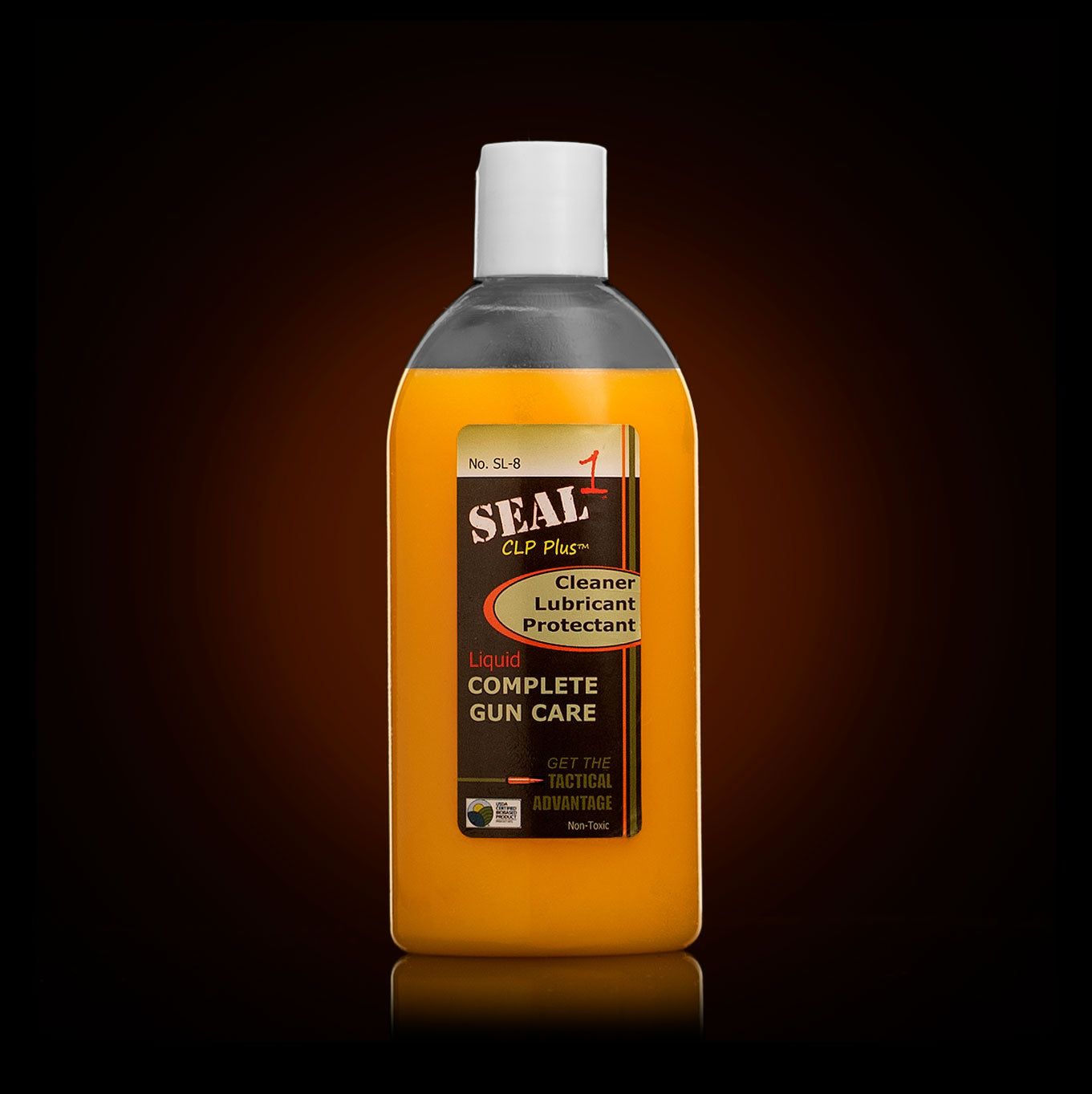
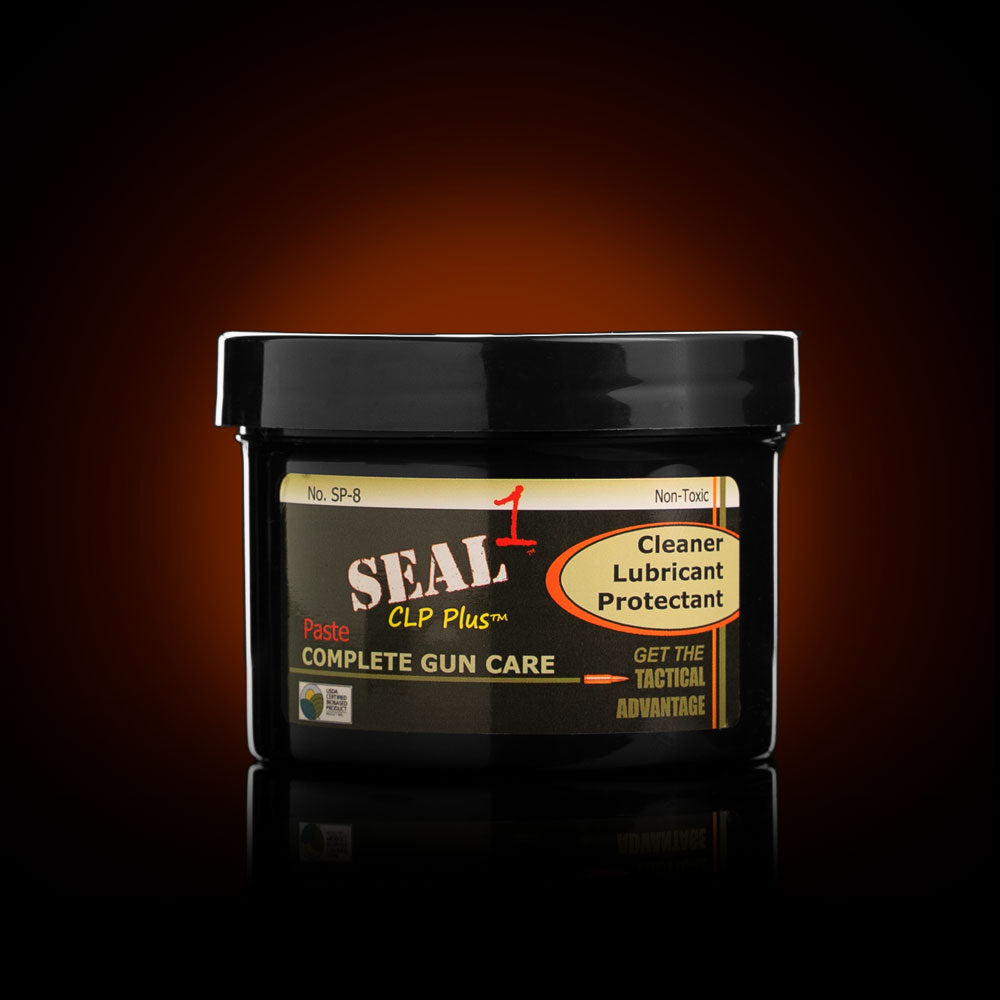
SEAL 1 CLP Plus® is a bio-based, non-toxic formula that cleans, lubricates, and protects in one step. It is a dry lubricant that performs best when wiped completely off the firearm. Wipe on to clean, wipe off to lubricate.
It is made by a service-disabled veteran-owned company. You can pick the format that fits your routine: the CLP Plus® liquid at $10.35, or the CLP Plus® paste at $9.85.
One product, one routine, no compatibility guesswork. That is the simplest way to avoid the mixing problem entirely.
Mixing gun oils is a risk you do not need to take. If you want a single product that cleans, lubricates, and protects without reacting to leftovers, SEAL 1 has you covered.
Frequently Asked Questions
Can you mix different gun oils?
You can physically pour them together, but that does not mean they work well as a blend. Different gun oils use different base stocks and additive packages, and those additives can react, clump, or separate when combined. The result is often a gummy film instead of a smooth lubricating layer. If you want to change products, clean the old oil off first rather than layering a new formula on top of it.
Do you need to remove old gun oil before switching to a new one?
Yes, and it matters more than most shooters expect. Old oil carries carbon, metal debris, and spent additive residue. If you apply a new product over that layer, you trap the grit against the slide rails and bolt carrier group. Wipe down and degrease the contact surfaces, then apply a thin coat of the new product. Cleaning old gun oil from a firearm takes a few extra minutes and prevents the clumping that makes actions feel sluggish.
Can too much gun oil on a gun cause problems?
It can. Excess oil attracts dust and unburned powder, thickens in cold weather, and can migrate into the firing pin channel or bolt assembly where it slows ignition. Over-oiling also makes fouling stick instead of wipe away. The fix is a thin film on metal-to-metal contact points only, with the rest wiped dry. A dry-film CLP like SEAL 1 CLP Plus® is designed to be wiped off almost completely after application.
Can you use 3-in-1 oil or engine oil as gun lubricant?
Household 3-in-1 oil and motor oil are not formulated for firearms. They lack the corrosion inhibitors and thermal stability a gun needs, and motor oil additives can leave sticky deposits in a cold action. 3-in-1 oil for guns is a common shortcut, but it tends to evaporate and leave a thin film that does not hold up under heat or repeated cycling. Use a product made for firearm maintenance instead.


