

Table of Contents
- Why Proper Lubrication Matters for Polymer Pistols
- Pistol Lubrication Points: Where to Apply Lubricant
- Best Lubricant for Polymer Frame Guns
- How Much Oil to Use on a Handgun
- How Often to Lubricate a Pistol
- Step-by-Step Lubrication Process for Polymer Pistols
- Common Mistakes to Avoid When Lubricating Polymer Pistols
- Frequently Asked Questions
Last Updated: October 11, 2026
Why Proper Lubrication Matters for Polymer Pistols
When you lubricate polymer pistols correctly, you reduce friction, prevent corrosion, and extend lifespan. Polymer frames require specific care to avoid degradation.
A poorly lubricated pistol fails when you need it most, friction builds up, metal surfaces wear faster, and corrosion sets in.
The difference between reliable function and failure comes down to proper lubrication technique. You need to understand where lubricant goes, how much to apply, and why it matters.
This guide covers the exact contact points that need attention, the right lubricant viscosity for polymer frames, and the step-by-step process.
Pistol Lubrication Points: Where to Apply Lubricant
Every polymer pistol has specific contact points where friction occurs. These are the areas that wear fastest and need regular lubrication. Understanding where to apply lubricant separates a thorough maintenance routine from a careless one.
Slide and Frame Contact Surfaces
The slide rides on the frame with every shot. This is where the most friction occurs. Apply lubricant along the contact surfaces where the slide rails meet the frame. These surfaces take a beating during firing, and without proper lubrication, wear accelerates dramatically.
Pay special attention to the inside of the slide where it contacts the frame, a critical wear point. Apply a small amount and work it in by cycling the slide back and forth several times.
Don't forget the underside of the slide, it also contacts the frame and needs the same attention as the top surfaces.
Barrel and Barrel Lugs
The barrel lugs lock the barrel into the slide during firing and experience intense pressure and heat. Lubricate both sides where they contact the slide.
Apply lubricant to the barrel focusing on areas that contact the slide, creating a thin, even coat that protects against corrosion and reduces friction.
The barrel hood (the front part of the barrel inside the slide) also needs lubrication, it's a high-stress area.
Guide Rod and Recoil Spring
The guide rod slides along the frame and needs lubrication at its contact points where it enters and exits the frame.
The recoil spring needs a light coat to protect it from corrosion, especially if your pistol sits in storage.
Lubricate where the guide rod contacts the slide, a friction point that reduces wear and improves reliability.
Best Lubricant for Polymer Frame Guns
Not all lubricants are created equal. Polymer frames require special consideration because certain oils can degrade plastic components over time. Choosing the right lubricant protects your investment and ensures reliable performance.
Understanding Viscosity and Polymer Compatibility
Viscosity is the thickness of the lubricant. Light viscosity oils flow easily into tight spaces; heavy viscosity oils cling longer. For polymer pistols, light viscosity works best.
Many traditional gun oils contain harsh solvents that soften or crack plastic over time. Specialized formulas protect polymer components.
SEAL 1 CLP Plus is formulated specifically for polymer frames. The bio-based formula protects plastic components while delivering superior lubrication. It infuses into metal surfaces for long-term protection without harming the polymer frame.

Why Bio-Based Formulas Protect Polymer Components
Bio-based lubricants are gentler on polymer than petroleum-based oils, which can degrade plastic through chemical interaction.
Bio-based formulas also mean fewer harsh fumes and no volatile organic compounds (VOCs), keeping your workspace safer.
How Much Oil to Use on a Handgun
Over-lubrication attracts dirt and fouling, creating a paste that interferes with function. Under-lubrication leaves surfaces unprotected and causes excessive wear.
The Right Amount for Each Component
Less is more when lubricating a pistol. A single drop in the right place beats a quarter-ounce spread across the gun. Here's the breakdown:
- Slide rails: One small drop per side. Work it in and wipe away excess.
- Barrel lugs: One tiny drop per lug. This area needs protection, not saturation.
- Guide rod: One drop at the point where it contacts the frame.
- Recoil spring: A light wipe along the spring. Don't soak it.
- Trigger group: Minimal lubrication. One tiny drop at the trigger bar connection point.
The goal is a thin, even coat that protects without accumulating. When you wipe the gun afterward, you should see almost no residue. If you see thick buildup, you've applied too much.
Avoiding Over-Lubrication and Under-Lubrication
Over-lubrication creates reliability problems, excess oil mixes with carbon fouling and creates a gritty paste that can slow the striker, interfere with the trigger, or prevent smooth cycling.
Under-lubrication leaves metal surfaces exposed to friction and corrosion, accelerating wear and degrading reliability over time.
The sweet spot is a thin protective layer. Apply just enough lubricant to cover the surface. Then wipe away excess until you can barely see it. This is the balance that works.
| Component | Amount | Application Method |
|---|---|---|
| Slide rails | 1 drop per side | Apply, work in, wipe excess |
| Barrel lugs | 1 tiny drop per lug | Small applicator or brush |
| Guide rod | 1 drop at contact point | Wipe along contact area |
| Recoil spring | Light wipe | Cloth or brush application |
| Trigger group | Minimal (1 drop) | Single point at connection |
How Often to Lubricate a Pistol
Lubrication frequency depends on use and environment. Heat, cold, humidity, and dust all affect maintenance intervals.
Maintenance Intervals Based on Use and Environment
Lubricate after every range session, firing depletes lubricant and builds up fouling. A fresh coat protects surfaces and removes old residue.
For daily carry, lubricate monthly, dust and moisture accumulate even without shooting.
Firearms in storage need lubrication every three to six months to prevent rust and oxidation from humidity and temperature fluctuations.
Extreme environments demand more frequent attention, cold slows lubricant flow, heat and humidity accelerate corrosion.
If the slide becomes stiff or the trigger feels gritty, clean and lubricate immediately, don't wait for scheduled intervals.
Step-by-Step Lubrication Process for Polymer Pistols
A proper lubrication routine takes ten minutes. It's simple, methodical, and delivers reliable results every time. Follow this process exactly.
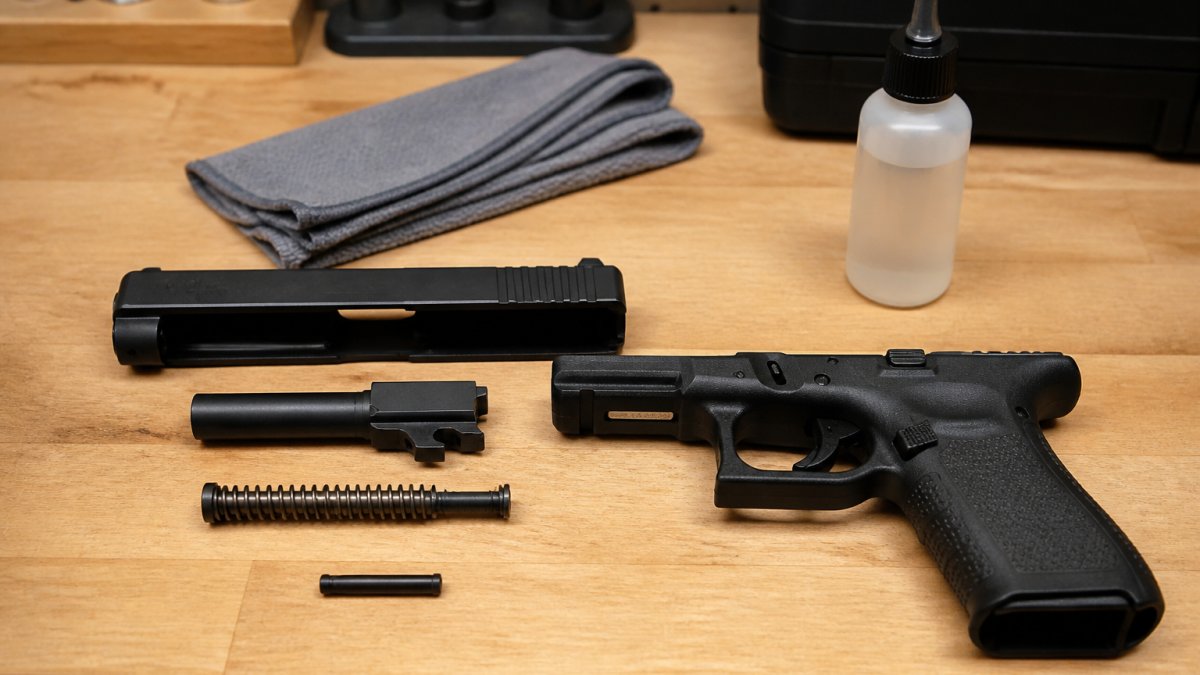
Step 1: Prepare Your Firearm and Workspace
Start by ensuring your firearm is unloaded. Remove the magazine. Rack the slide multiple times. Check the chamber visually and physically. Never lubricate a loaded gun.
Set up a clean workspace with good lighting. Lay out a cloth or mat to catch drips. Gather your lubricant, cleaning patches, and a soft brush. Organization prevents mistakes and makes the job faster.
Disassemble your pistol according to the manufacturer's instructions. For most polymer pistols, this means removing the slide from the frame. Some designs require removing the barrel and recoil spring assembly. Check your manual if you're unsure.
Step 2: Apply Lubricant to Critical Contact Points
Start with the slide rails. Apply one small drop to each rail where it contacts the frame. Use a brush or applicator bottle for precision.
Move to the barrel. Apply a tiny drop to each barrel lug where it contacts the slide. These are small areas, a drop goes a long way.
Lubricate the guide rod where it contacts the frame. One drop at the point of contact is sufficient. The guide rod doesn't need heavy lubrication.
Apply a light coat to the recoil spring. Use a cloth or brush to wipe a thin layer along the spring. This protects it from corrosion without creating buildup.
Check the trigger group according to your pistol's design. Most modern striker-fired pistols have sealed trigger groups that need minimal lubrication.
Step 3: Work in the Lubricant and Perform a Function Check
Reassemble your firearm in reverse order. Slide the barrel and recoil spring assembly back into the slide. Insert the guide rod. Slide the assembled slide onto the frame.
Cycle the slide back and forth twenty times. This works the lubricant into all the contact points. You'll feel the action become smoother as the lubricant distributes.
Perform a function check. Dry fire the gun (with the chamber clear and pointed in a safe direction). The trigger should break cleanly. The slide should cycle smoothly. Everything should feel right.
Step 4: Wipe Off Excess and Inspect
This step separates proper maintenance from careless lubrication. Wipe down the entire gun with a clean cloth. Remove visible lubricant from all external surfaces. The gun should look clean, not shiny.
Check the slide rails. Wipe away any excess lubricant. The rails should have a thin protective coat, not a wet appearance. Inspect the barrel and frame contact points. Wipe away residue.
Look inside the action. If you see thick buildup or pooling lubricant, you've applied too much. Clean it out and start over with less product.
A properly lubricated pistol should feel smooth when you cycle the slide. It should look clean. There should be no visible dripping or excess. This is the standard to aim for.
Common Mistakes to Avoid When Lubricating Polymer Pistols
Most shooters make the same errors repeatedly. Learning what NOT to do prevents problems before they start.
Mistake #1: Using the wrong lubricant. Traditional gun oils work fine on steel guns but can damage polymer frames. Use a lubricant formulated for polymer components. SEAL 1 CLP Plus is designed for this purpose, it protects polymer while delivering superior lubrication.

Mistake #2: Applying too much lubricant. This is the most common error. Excess oil attracts dirt and fouling.
Mistake #3: Neglecting the barrel lugs. Many shooters focus on the slide rails and forget the barrel.
Mistake #4: Ignoring the guide rod. The guide rod slides along the frame with every shot.
Mistake #5: Lubricating a dirty gun. Lubrication traps dirt inside the action. Always clean your gun before lubricating.
Mistake #6: Using the same lubricant for everything. Different parts have different needs.
Mistake #7: Skipping the wipe-down. After working in lubricant, wipe the gun clean.
Proper lubrication is non-negotiable for firearm reliability. A well-maintained pistol performs when it matters.
SEAL 1 CLP Plus delivers all the protection your polymer pistol needs in one step. It's trusted by law enforcement and tested in extreme temperatures from -50°F to +650°F. SHOP NOW and experience the difference a purpose-built lubricant makes.
Frequently Asked Questions
Where should you lubricate a polymer pistol?
Apply lubricant to the slide rails, frame rails, barrel lugs, and guide rod, the main contact points where metal surfaces move against each other. These wear points generate friction and heat during firing. For polymer frames, focus on the metal components: the barrel, slide, springs, and internal mechanisms. Avoid applying lubricant directly to the polymer frame itself; instead, target the metal parts that interact with it. SEAL 1 CLP Plus® works on all metals and polymers, making it ideal for protecting both materials without causing damage to delicate finishes.
How much lubricant should you use on a pistol?
Use a small amount, typically a few drops or a light coating on each lubrication point. The goal is a thin film that reduces friction, not a heavy coating. Start with less than you think you need; you can always add more. A common approach is to apply a small drop to each rail, a light coat on the barrel, and minimal lubricant on the guide rod. Too much lubricant attracts dirt, carbon, and debris, which can gum up your pistol and reduce reliability. Wipe off excess after application to maintain optimal performance.
How often should you lubricate a pistol?
Lubricate your pistol every 250-500 rounds fired, or monthly if you shoot less frequently. If you carry daily or store your firearm for extended periods, lubricate every 3-6 months to prevent corrosion and oxidation. Environmental factors matter: high humidity, salt air, or extreme temperatures increase the need for maintenance. After exposure to moisture, sand, or harsh conditions, clean and lubricate immediately. For duty or competitive use, inspect and lubricate between shooting sessions to ensure consistent performance and reliability.
Can gun oil damage a polymer pistol frame?
Traditional petroleum-based gun oils can degrade some polymer materials over time, causing discoloration, swelling, or brittleness. Bio-based, non-toxic formulas like SEAL 1 CLP Plus® are safe for polymer frames. The formula infuses into metal for long-term protection while remaining safe for polymer frames. Always verify that your lubricant is compatible with polymer materials before applying it to your firearm. Avoid leaving excess lubricant on the polymer frame; apply it to metal contact surfaces and wipe off any overflow to minimize polymer exposure.


