

Table of contents
- Why does a Regular Gun Maintenance Schedule Matter?
- General Rules for Firearm Cleaning Frequency
- Cleaning Schedule for Pistols
- Cleaning Schedule for Rifles
- Cleaning Schedule for Shotguns
- Cleaning Schedule for AR-15s
- Gun Maintenance Tools that Make all the Difference
- Step-by-Step: A Basic Gun Cleaning Routine
- Storing Your Firearm After Cleaning
- Warning Signs that Your Firearm Needs Expert Attention
- Keep Your Firearms Performing at Their Best with SEAL 1
- Frequently Asked Questions (FAQs)
How often should you clean your firearm? Some firearm owners clean after every range session, while others wait until performance begins to decline. Finding the right balance is key to protecting your investment and ensuring dependable operation.
A consistent gun maintenance routine helps improve reliability, preserve accuracy, and extend the life of your firearm. However, timing alone isn't enough. Using quality firearm maintenance products and following the right cleaning schedule can make all the difference.
This guide explains when to clean pistols, rifles, shotguns, and AR-15s, along with practical maintenance recommendations for each firearm type.
Why does a Regular Gun Maintenance Schedule Matter?
A few minutes of routine care can make the difference between dependable performance and unexpected problems. Following a consistent gun maintenance schedule helps keep your firearm reliable, accurate, and ready when you need it most.
Prevent Residue Buildup
Every shot leaves behind carbon fouling, unburned powder, and copper deposits inside your firearm. Over time, this buildup can cause misfires, jams, increased wear, and even dangerous malfunctions.
Prevent Rust and Corrosion
Moisture, humidity, and even the natural oils from your hands can lead to rust and corrosion over time. Routine maintenance helps protect metal components and extends the life of your firearm.
Make Gun Cleaning Faster and Easier
Sticking to a regular gun cleaning routine prevents heavy fouling from accumulating, making each cleaning session quicker, more effective, and less time-consuming.
Proper firearms maintenance is an investment in the long-term performance of your firearm. By making routine cleaning part of your schedule, you can minimize unexpected problems and help ensure reliable operation every time you use your firearms.
General Rules for Firearm Cleaning Frequency
While cleaning intervals vary by firearm type and usage, a few basic guidelines apply to every firearm. Following these best practices can help maintain reliable performance and prevent avoidable wear.
- Clean After Every Range Session: Remove fouling and residue after each shooting session, regardless of the number of rounds fired.
- Clean After Exposure to Moisture or Harsh Conditions: Rain, humidity, dust, and mud can accelerate rust and corrosion. Clean and lubricate your firearm as soon as possible.
- Inspect After Long-Term Storage: Before and after extended storage, check for dried lubricant, corrosion, or signs of moisture damage.
- Inspect Every 3–6 Months if Left Unused: Even firearms that haven't been fired should be inspected and lightly lubricated to prevent oxidation and keep moving parts protected.
A consistent maintenance routine is more important than cleaning excessively. Even if a deep clean isn't necessary, wipe down the exterior, inspect the bore, and apply a light coat of oil or a quality firearm cleaning solution to keep your firearm in excellent condition.
Cleaning Schedule for Pistols
Pistols require frequent attention because they're often carried every day, exposing them to lint, dust, moisture, body oils, and residue from regular use.
Whether you use your handgun for concealed carry, personal protection, or recreational shooting, a consistent gun maintenance routine helps ensure reliable performance when it matters most.
Recommended Cleaning Frequency for Pistols
- After Every Shooting Session: Clean your pistol after each range visit, regardless of the number of rounds fired.
- Weekly, if Carried Daily: Even if it hasn't been fired, inspect and clean it to remove lint, dust, and body oils.
- Monthly for Stored Pistols: Check and clean pistols that remain in storage to prevent moisture buildup and corrosion.
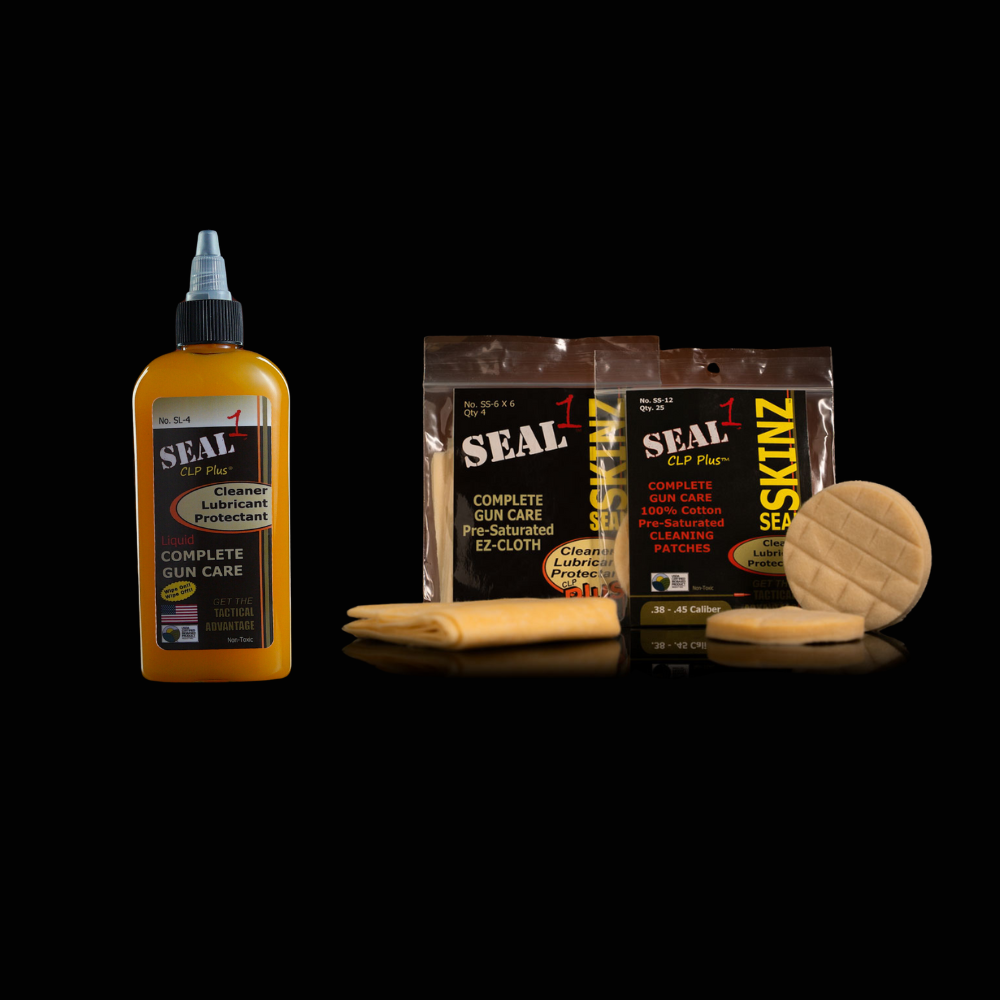
For fast and effective maintenance, use a non-toxic gun cleaner that removes carbon and fouling without harsh fumes. SEAL 1 CLP Plus® Liquid cleans, lubricates, and protects in a single application, making routine care simple and efficient.
If you need a portable cleaning solution, the SKIT-Mini fits easily into a range bag or carry case, so you're always prepared wherever you go.

Cleaning Schedule for Rifles
Rifles rely on a clean bore and properly lubricated moving parts to deliver consistent accuracy and dependable performance. Whether you own a bolt-action, semi-automatic, or lever-action rifle, following a regular cleaning schedule helps reduce fouling, prevent corrosion, and extend the life of your firearm.
Recommended Cleaning Frequency for Rifles
- After every range session or hunting trips
- After every 200–500 rounds for competitions or recreational shooting
- Monthly or seasonally for rifles kept in storage
Copper fouling is one of the most common causes of declining rifle accuracy, especially after high round counts. Using quality firearm cleaning supplies makes the cleaning process more effective. SEAL 1™ Cotton Cleaning Patches help clean the bore and wipe down components, while SEAL SKINZ™ Pre-Saturated Patches provide the right amount of cleaning solution for fast and consistent results.


For hunters, firearms maintenance is especially important after exposure to rain, mud, snow, or other harsh conditions. Cleaning your rifle with dependable firearm cleaning products after every outing helps prevent rust, remove contaminants, and keep it ready for your next trip.
Cleaning Schedule for Shotguns
Shotguns are built to handle demanding use, whether for home defense, hunting, or clay shooting. While they can tolerate more fouling than many other firearms, regular cleaning is still essential to maintain reliable cycling, consistent patterns, and long-term performance.
Recommended Cleaning Frequency for Shotguns
- After every hunting trip or defensive use
- Every 250–500 rounds during clay shooting or sporting events
- Before and after long-term storage, especially in humid environments
Plastic wad residue gradually builds up inside the bore over time, affecting choke tube performance and shot pattern consistency. Using a quality gun cleaning liquid helps remove this buildup and keeps your shotgun performing as expected.

Choke tubes also require routine attention. Remove and clean them separately to prevent carbon and plastic residue from seizing the threads. Applying a reliable firearms cleaner with a bore brush helps keep choke tubes easy to remove and reinstall.
Finally, don't forget the exterior. The Gun Rag is ideal for removing fingerprints, oil, and grime from the stock and receiver while helping preserve your shotgun's finish.

Cleaning Schedule for AR-15s
The AR-15 is built for reliability and high performance, but its direct impingement gas system also makes it more prone to carbon buildup than many other rifle platforms.
Following a consistent cleaning schedule helps maintain smooth cycling, dependable function, and long-term performance.
Recommended Cleaning Frequency for AR-15s
- After Every Range Session: Clean your AR-15 after every range visit, especially if you've fired more than 200 rounds.
- Every 500 – 1,000 Rounds: Field-strip and inspect key components to remove buildup and check for wear.
- Every 2,500 – 5,000 Rounds or Annually: Perform a complete detail strip and deep cleaning to maintain reliable performance.
Pay close attention to the bolt carrier group (BCG), gas key, and charging handle, as these components collect the most carbon fouling. A quality CLP gun cleaner helps loosen stubborn carbon deposits, making them easier to remove while lubricating and protecting critical parts.
For a complete cleaning setup, the Universal Gun Cleaning Kit includes the essential brushes, jags, patches, and rods needed to maintain your AR-15. Pair it with a non-toxic gun cleaner for an effective cleaning routine without harsh fumes.
If you shoot in freezing temperatures, consider using SEAL's Signature Series Below Zero . This specialized lubricant is formulated to perform in extreme cold, helping your AR-15 cycle smoothly when conventional oils may begin to thicken.

Gun Maintenance Tools that Make all the Difference
Even the best cleaning routine can fall short if you're using low-quality products. Consistent results depend on choosing reliable firearm cleaning products that clean effectively, protect metal surfaces, and simplify maintenance.
CLP Solutions
A CLP (Cleaner, Lubricant, Protectant) streamlines maintenance by combining three essential functions into one product.
SEAL 1's CLP gun cleaner line delivers professional-grade performance by removing fouling, displacing moisture, and helping prevent rust while keeping moving parts properly lubricated across a wide range of conditions.
Cleaning Paste for Heavy Fouling
For stubborn carbon and lead deposits, a gun cleaning paste provides a more concentrated cleaning approach. Its thicker consistency allows the firearm cleaning solution to cling to surfaces longer, helping break down tough fouling more effectively than liquid cleaners alone. It is especially useful for areas like the bolt carrier group and trigger assembly.


Patches and Cleaning Cloths
Patches are essential for bore cleaning and residue removal. SEAL 1™ Cotton Cleaning Patches offer consistent absorbency for applying solvent and wiping away fouling, while SEAL SKINZ™ Pre-Saturated Patches provide a ready-to-use option pre-loaded with firearm cleaning supplies, making cleaning faster and more convenient.
Gun Cleaning Accessories
Specialized gun cleaning accessories such as bore guides, rods, chamber brushes, and detail picks help reach hard-to-access areas for a more thorough clean. Investing in a SEAL 1™ Complete Gun Care Kits ensures you have all the essential tools needed for effective firearm maintenance in one complete solution.
Step-by-Step: A Basic Gun Cleaning Routine
How to Clean Your Gun
A proper cleaning routine doesn’t need to be complicated. Following a clear step-by-step process ensures your firearm stays safe, reliable, and free from damaging buildup.
Step 1: Ensure the Firearm is Unloaded
Always double-check that the firearm is completely unloaded and remove all ammunition from the cleaning area before beginning.
Step 2: Field-Strip the Firearm
Break the firearm down into its main components such as the barrel, slide or bolt carrier group, frame or receiver, and recoil assembly for easier access.
Step 3: Clean the Barrel and Bore
Apply a firearms cleaner and use a bore brush followed by patches to scrub away carbon, copper, and residue buildup.
Step 4: Clean the Action and Moving Parts
Use a brush and solvent to remove carbon deposits from critical areas like the bolt, rails, and trigger assembly.
Step 5: Wipe Everything Dry
Remove all remaining solvent and loosened fouling using clean patches and a cloth like The Gun Rag.
Step 6: Apply Lubrication
Apply a CLP or suitable oil to key friction points such as rails, barrel hood, and bolt lugs to ensure smooth operation.
Step 7: Reassemble and Function Check
Reassemble the firearm and perform a basic function check to ensure everything cycles correctly and safely.
This entire process typically takes 15-30 minutes and becomes even quicker when using the right gun cleaning supplies.
Storing Your Firearm After Cleaning
Proper storage is the final step in keeping your firearm protected between uses. Once cleaning is complete, apply a light coat of oil or a protectant to all exposed metal surfaces before placing the firearm in a safe, case, or holster. Avoid leaving excess oil in the bore, as it can affect the accuracy and create pressure inconsistencies when firing.
For long-term storage, use vapor-phase corrosion inhibitors or a silicone-treated gun sock to help protect against humidity and oxidation, especially if the firearm will remain unused for an extended period. For additional best practices on secure and responsible firearm storage, the National Shooting Sports Foundation (NSSF) offers helpful safety resources for firearm owners.
If you store firearms in a safe with fluctuating humidity, add a dehumidifier rod or desiccant pack to control moisture and reduce the risk of rust. These simple precautions help preserve your firearm and complement your regular gun maintenance routine.
Warning Signs that Your Firearm Needs Expert Attention
Routine gun cleaning can prevent many common issues, but some problems require the expertise of a qualified gunsmith. If you notice any of the following issues, it's time to seek professional service.
- Persistent Malfunctions: If your firearm continues to experience feeding, cycling, or firing issues after cleaning, have it inspected by a qualified gunsmith.
- Rust or Pitting: Visible rust, corrosion, or pitting on the bore or critical components should be addressed before it affects performance or safety.
- Damaged or Worn Parts: Cracked, broken, or excessively worn components should be repaired or replaced by a professional.
- Complex Internal Repairs: Detailed work on internal mechanisms, such as the trigger group, is best handled by an experienced gunsmith.
Following a consistent firearms maintenance routine helps reduce wear, prevent unexpected issues, and minimize the need for costly repairs.
Keep Your Firearms Performing at Their Best with SEAL 1
A consistent cleaning schedule is the key to maintaining the reliability, accuracy, and longevity of your firearms. Whether you own a pistol, rifle, shotgun, or AR-15 platform, routine maintenance, proper storage, and the right cleaning techniques help prevent fouling, corrosion, and unnecessary wear while ensuring your firearm is always ready for use.
Choosing high-quality firearm maintenance products is just as important as cleaning regularly. From a non-toxic gun cleaner for everyday maintenance to a dependable CLP gun cleaner and complete cleaning kits, SEAL 1 offers trusted solutions designed to clean, lubricate, and protect your firearms under a wide range of conditions.
Not sure which gun cleaning products or maintenance routines are right for your firearm? The SEAL 1 team is here to help. Contact our experts for personalized guidance on selecting the right cleaning solutions and tools based on your firearm type, shooting habits, and maintenance needs.
Frequently Asked Questions (FAQs)
Can I use the same cleaning products for all types of firearms?
Many cleaning products are suitable for multiple firearm types, but always verify that they are compatible with your firearm's finish, materials, and manufacturer recommendations. Using the appropriate products helps protect components while ensuring effective cleaning.
How can I tell if my firearm has been over-lubricated?
Excess lubricant can attract dust, dirt, and carbon fouling, leading to unnecessary buildup. If oil is pooling inside the action or dripping from the firearm, it's a sign that too much lubricant has been applied.
Should I replace my cleaning patches during the cleaning process?
Yes. Replace cleaning patches as they become dirty to avoid spreading fouling back into the barrel or onto other components. Fresh patches help ensure a more effective cleaning process.
How should I store my firearm cleaning supplies?
Store cleaning products in a cool, dry place away from direct sunlight and extreme temperatures. Keep containers tightly sealed to prevent contamination or evaporation and to maintain their effectiveness.
Is it safe to mix different firearm cleaning products?
It's generally not recommended. Different cleaning products may contain chemicals that aren't designed to work together. For the best results, use products as directed by the manufacturer and wipe away one product before applying another if necessary.
What is the best gun maintenance product?
The best gun maintenance product is one that cleans, lubricates, and protects your firearm in a single application. Bio-based products like SEAL 1’s CLP Plus remove fouling, reduce friction, prevent corrosion, and keep firearms operating reliably in a wide range of conditions, making it a convenient choice for routine maintenance.


