

Table of Contents
- What Makes a Gun Cleaner Range-Ready
- The Best CLP for Firearms: One Product, Three Jobs
- How to Clean a Handgun at the Range in Under 10 Minutes
- Non-Toxic Gun Cleaner Benefits for Indoor Shooters
- What to Look for in a Range Cleaning Kit
- Range-Specific Environmental Factors and Waste Disposal
- Frequently Asked Questions
Last Updated: September 16, 2026
What Makes a Gun Cleaner Range-Ready
A gun cleaner built for range use prioritizes portability, speed, and multi-function performance over deep-cleaning capability. Most shooters clean at home, but a growing number handle basic maintenance on the bench before packing up.
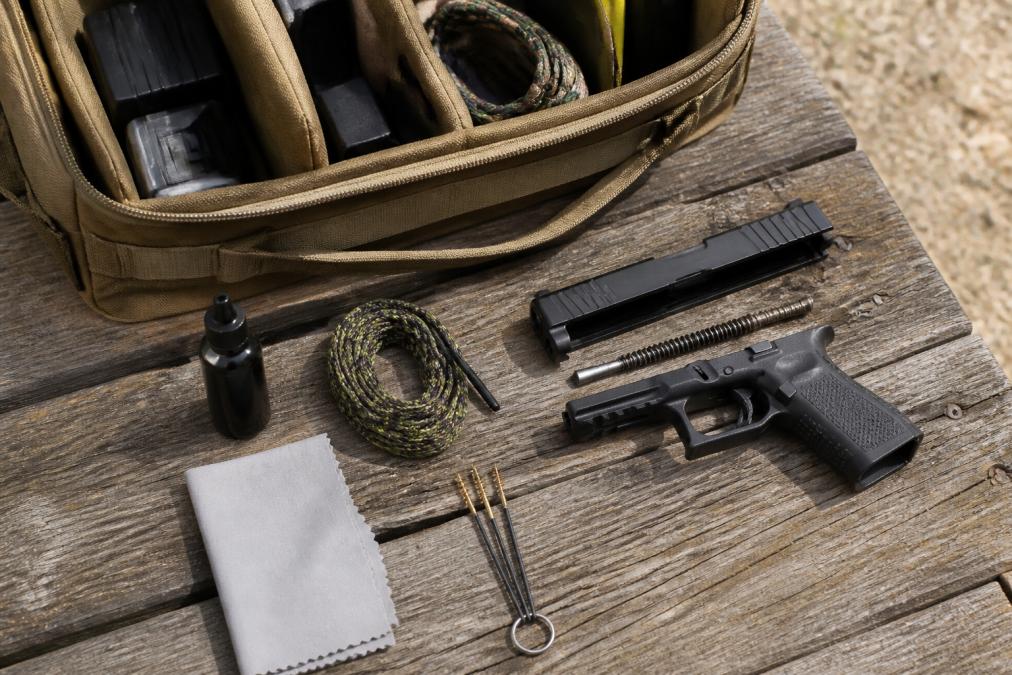
Portability and Speed of Use
Compact bottles and single-product formulas win at the range. A 2-4 oz container fits in a side pocket, and a CLP that cleans, lubricates, and protects in one application replaces three separate bottles. Speed matters because range time is limited.
Universal vs. Caliber-Specific Kits
Universal kits cover multiple calibers with interchangeable brushes, jags, and patches. Caliber-specific kits fit one firearm precisely but lock you into that platform. For shooters who bring more than one gun, universal is the practical choice.
Kit Type |
Best For |
Trade-off |
|---|---|---|
Universal |
Multiple calibers, mixed range days |
Bulkier bag footprint |
Caliber-specific |
Single-platform shooters, precision work |
Limited to one bore size |
CLP-only |
Fast wipe-downs, carry guns |
No brushes or patches included |
The Best CLP for Firearms: One Product, Three Jobs
Tested from -50°F to +650°F, SEAL 1 is trusted by law enforcement and built by a service-disabled veteran-owned company. A customer running a POF-USA P416 cleaned with SEAL 1 CLP Plus® put it through a meltdown test: the weapon never failed.
How to Clean a Handgun at the Range in Under 10 Minutes
Cleaning a handgun at the range in under 10 minutes is achievable with a field strip, a bore snake, a CLP, and a microfiber cloth. The goal isn't a white-glove deep clean, it's removing the fouling that causes corrosion and keeping the action running until your next teardown.
- Safety check and field strip (1 minute). Confirm the chamber is empty, remove the magazine, and field strip per your manual.
- Run a bore snake through the barrel (1 minute). Two or three passes clears loose carbon and copper buildup.
- Wipe the slide and frame with CLP (3 minutes). Focus on the breech face, extractor, and feed ramp. These collect the most carbon fouling.
- Apply CLP to the slide rails and barrel hood (1 minute). A thin film is enough. More lubricant attracts more residue.
- Reassemble and function check (2 minutes). Rack the slide, confirm the trigger resets, and verify the barrel is clear of obstruction.
- Wipe down the exterior (1 minute). This is your rust prevention step before the gun goes back in the case.
Non-Toxic Gun Cleaner Benefits for Indoor Shooters
Non-toxic gun cleaner benefits matter most for shooters who train indoors. Traditional petroleum-based solvents off-gas in poorly ventilated bays, and repeated exposure is a real concern for weekly shooters.
What to Look for in a Range Cleaning Kit
A range cleaning kit needs five things: a multi-purpose CLP, a bore snake matched to your caliber, a small brush set, lint-free microfiber cloths, and a compact storage pouch. Everything else is optional. What separates a kit that gets used from one that stays in the truck comes down to specifics, bottle size, brush material, patch fabric, and how it packs.
- A 2-4 oz CLP bottle with a flip-top or needle applicator. A 4 oz bottle is roughly the size of a deck of cards and fits a side pocket. Needle tips reach the breech face and extractor without flooding the action; flip-tops are faster for slide rails. Avoid trigger-spray bottles, they waste product and overspray.
- A bore snake in your exact caliber, not a "universal" one. A .22 snake in a 9mm bore scrubs unevenly and a 9mm snake in a .40 leaves the grooves untouched. Buy one per caliber you shoot. Two or three passes is the range standard, save the rod-and-jag routine for home.
- A nylon-bristle brush set plus one bronze brush. Nylon for the frame, magazine well, and polymer surfaces; bronze for the breech face, extractor, and feed ramp where carbon cements on. Never use stainless on a blued or nitrided finish.
- Lint-free microfiber cloths, not cotton patches, for exterior wipe-downs. Microfiber holds solvent without shedding fibers into the action, and it's reusable, rinse, air-dry, back in the bag. Cotton patches still have a place for bore work.
- A synthetic-base formula over conventional petroleum oil. Synthetic bases hold viscosity across a wider temperature band, which matters if your range bag sits in a hot car or a cold truck bed. Conventional petroleum oils thin in heat and thicken in cold.
- A non-toxic, bio-based formula if you shoot indoors. Indoor bays concentrate solvent fumes. A bio-based CLP reduces exposure without giving up cleaning performance, and it's the practical choice for kitchen-table or closed-garage cleaning.
- A compact pouch with a hang loop or carabiner. The kit should clip to the outside of your range bag, not disappear into the main compartment. A paperback-sized pouch holds a 4 oz CLP, one bore snake, a brush set, and two microfiber cloths.
Item |
Range Spec |
Why It Matters |
|---|---|---|
CLP bottle |
2-4 oz, flip-top or needle tip |
Fits a side pocket; controls application |
Bore snake |
One per caliber you shoot |
Even scrubbing; no bent-rod risk |
Brush set |
Nylon + one bronze |
Polymer-safe plus carbon-cutting |
Wipes |
Lint-free microfiber |
Reusable, no fiber shed |
Base |
Synthetic |
Stable viscosity across temps |
Formula |
Non-toxic / bio-based |
Indoor and home-safe |
The single biggest upgrade to a range kit is replacing three bottles with one CLP. Fewer decisions, less weight, and no risk of applying solvent over fresh lubricant. The second biggest is matching your bore snake to your caliber instead of trusting a "universal" label.
Range-Specific Environmental Factors and Waste Disposal
Most cleaning guides assume a climate-controlled bench at home. Public ranges are not that. Dust, humidity, temperature swings, and lead residue all change how you clean and what you do with the waste afterward.
How the environment changes your routine
- Outdoor, dusty, windy ranges. Airborne grit settles into the action and mixes with lubricant to form an abrasive paste. Wipe exterior surfaces before you re-oil, otherwise you're grinding dust into the slide rails. A dry microfiber pass first, then a thin CLP film.
- High heat and direct sun. A firearm left on a bench in summer sun gets hot enough that thin petroleum oils run off the slide rails. A synthetic-base CLP holds its film better at high surface temperatures. If you can't hold your hand on the slide, wait a minute before applying lubricant.
- High humidity and coastal ranges. Salt air and sweat accelerate surface rust on blued and phosphate finishes. A protective film before the drive home matters more here than anywhere else. Wipe the exterior, apply a thin CLP layer, and don't case the gun wet.
- Indoor ranges. The dominant residue is lead and primer compound, not just carbon. Lead styphnate settles on every surface you touch, the bench, your hands, your bag, your phone. Wash hands with cold water and soap before eating or drinking.
Disposing of cleaning waste at a public range
Used patches, swabs, and microfiber cloths carry solvent residue and heavy metals, lead, copper, and primer compounds. They are not ordinary trash, and many ranges now require shooters to bag contaminated cleaning waste.
A practical routine that clears most range rules:
- Bring a sealable bag, a heavy-duty zip-top or small lidded container. Line it with a second bag if handling wet patches.
- Keep used patches and wipes separate from clean gear. Don't drop a solvent-soaked patch back into the pouch with your bore snake.
- Check the range's posted rules before your first session. Some ranges provide a designated container, some ask you to take waste home, and some prohibit bench cleaning entirely.
- At home, follow local household hazardous waste rules. Solvent-soaked rags and lead-contaminated wipes typically go to a municipal collection event, not the kitchen trash.
- Never pour used solvent down a drain or onto the ground. That's the most common mistake and the one most likely to get a shooter banned from a club.
Traveling with a range kit
If you fly to matches or out-of-state ranges, the TSA rules for transporting firearm parts and ammunition govern what goes in checked baggage versus your carry-on. Small CLP bottles fall under the TSA 3-1-1 liquids rule for carry-on, so pack them in checked luggage or transfer to compliant sizes. A few practical notes:
- Aerosol cans are generally not permitted in carry-on and are restricted in checked baggage. A non-aerosol CLP bottle is the travel-friendly choice.
- Flammable solvents are restricted by both TSA and DOT rules for air transport. If your cleaner is petroleum-based and flammable, it may not fly at all, another reason a non-toxic, bio-based CLP is the practical range-travel pick.
- Bore snakes, brushes, and patches are not restricted in checked baggage, but pack them so they cannot puncture or spill into your clothing.
- Declare firearms at the airline counter per the carrier's rules and the TSA firearms and ammunition guidance. Cleaning gear travels with the firearm in the same locked, hard-sided case.
Never leave a wet, heavily oiled firearm in a closed case, and never pack solvent-soaked patches in the same case as the firearm. Excess lubricant and solvent residue trap moisture and heavy-metal contamination against the finish and the case lining.
Range cleaning is a two-part job: clean the gun for the environment you are standing in, and handle the waste like the hazardous material it is. A sealable bag, a non-aerosol CLP, and a quick check of the range's posted rules cover almost every situation.
Frequently Asked Questions
What is the best gun cleaner for quick range maintenance?
A CLP (cleaner, lubricant, protectant) works best for quick range maintenance because it handles three jobs in one step. Look for a formula that wipes on to clean and wipes off to lubricate, like a dry lubricant that infuses into the metal. This saves time compared to using separate solvent, oil, and rust-prevention products. A compact bottle in your range bag means you can clean your firearm before you leave the bench.
How do I clean my gun after a trip to the range?
Start by field stripping your firearm and wiping down the barrel, slide, and action with a CLP-soaked patch or microfiber cloth. Run a bore snake or brush through the barrel to remove carbon fouling and copper buildup. Wipe off excess product, then apply a thin layer of lubricant to friction points. For a full walkthrough, see our step-by-step guide above on cleaning a handgun at the range.
Is a CLP better for range use than separate solvents?
For range use, a CLP is usually the better choice because it combines cleaning, lubrication, and corrosion protection in one product. Separate solvents and oils add steps and take up more space in your range bag. A good CLP handles carbon residue, reduces friction, and protects against rust without requiring you to switch products mid-clean. That said, some shooters still use a dedicated solvent for deep cleaning after heavy copper buildup.
Do I need to deep clean my firearm every time I visit the range?
No. A quick wipe-down and bore cleaning after each range session is enough to keep most firearms running reliably. A full deep clean, including detailed action cleaning and degreaser, is typically needed every 500 to 1,000 rounds or after shooting corrosive ammunition. Regular light maintenance with a quality gun cleaner prevents residue from hardening and keeps your firearm ready for the next trip. Range maintenance is the difference between a firearm that runs reliably for years and one that starts failing at the worst possible moment. SEAL 1 CLP Plus® handles cleaning, lubrication, and corrosion protection in a single bio-based formula, tested from -50°F to +650°F and trusted by law enforcement. Wipe on to clean, wipe off to lubricate, and get back to shooting. Shop SEAL 1 CLP Plus® and build a range kit that actually gets used.


