


Non-Toxic Gun Oil vs Traditional Oil for Long-Term Storage
Quick Summary
Non-toxic gun oil for long term storage is a protective layer built to hold moisture resistance and stay safe to handle over months, unlike range oil meant for fast cleaning during use. It works by forming a continuous, thin film that blocks water and oxygen from reaching the steel, and SEAL 1 CLP Plus is described as a bio-based option for this purpose.
- Storage oil must resist moisture, evaporation and migration over months, not just lubricate during use.
- A thin, continuous, fully wiped-down film protects better than a thick, uneven coat.
- Check whether the product fits your climate: humid spaces need moisture protection, dry spaces need dust protection.
- Clean the firearm first, apply a thin even coat, wipe off excess, then store in a dry location.
- SEAL 1 Below Zero CLP 2 oz is offered for cold-weather storage conditions.
Table of Contents
- Why Storage Oil Needs a Different Standard Than Range Oil
- How Non-Toxic Gun Oil for Long Term Storage Protects Metal
- Traditional Gun Oil and Grease: Where Each Falls Short
- Side-by-Side Comparison of SEAL 1 CLP Plus Formats and Bundles
- How to Store Firearms Long Term With Non-Toxic Oil
- Choosing the Best Oil for Long-Term Gun Storage in Your Climate
- Booking Your Next Storage Check: Stocking Up Your Cabinet Kit
- Frequently Asked Questions
Why Storage Oil Needs a Different Standard Than Range Oil
Last Updated: November 12, 2026
Non-toxic gun oil for long term storage has a different job than the oil you use after a range session. At the range, you need fast cleaning and a light film that handles heat and friction. In storage, a firearm may sit untouched for months, so the protective layer has to hold, resist moisture and stay safe to handle every time you open the cabinet. SEAL 1 builds its CLP Plus line around that longer window, with a bio-based formula that cleans, lubricates and protects in one step.
A storage product also gets handled more often than most people expect. You wipe a pistol down before it goes in the safe, you pull it out for inspection, and you may touch it again during the next storage check. That makes exposure safety part of the decision, not an afterthought.
Range oil and storage oil are often judged by the same label, but they solve different problems. Here is how the two standards differ:
| Factor | Range Oil | Long-Term Storage Oil |
|---|---|---|
| Primary goal | Clean and lubricate during active use | Protect metal while the gun sits |
| Film needed | Light, fast-wicking film | Durable barrier against moisture |
| Handling | Wiped on and off during cleaning | Touched during storage checks |
| Key concern | Fouling and friction | Corrosion over months or years |
How Non-Toxic Gun Oil for Long Term Storage Protects Metal
Corrosion is the main threat to a stored firearm, and it is a chemical process, not just a cosmetic one. Steel rusts when moisture and oxygen reach the surface and iron oxidizes; the reaction accelerates with temperature swings, high humidity, and salt or sweat residue left on the metal. A protective oil works by leaving a film that blocks water and oxygen from contacting the steel.
Non-toxic formulas approach this differently than solvent-based products. Many bio-based and synthetic oils rely on base stocks and additives that are designed to cling to metal and resist wash-off or evaporation, rather than on volatile solvents that flash off and leave little behind. The practical test is not the label claim but the film behavior: does it stay put across months, does it resist migrating into the action or stock, and does it wipe down to a dry, non-tacky finish that will not trap dust?
SEAL 1 CLP Plus® is described as a bio-based, non-toxic cleaner, lubricant, and protectant that forms a protective barrier against carbon, copper and lead buildup. Treat those as manufacturer claims, not independent test results, and verify them against your own storage conditions.
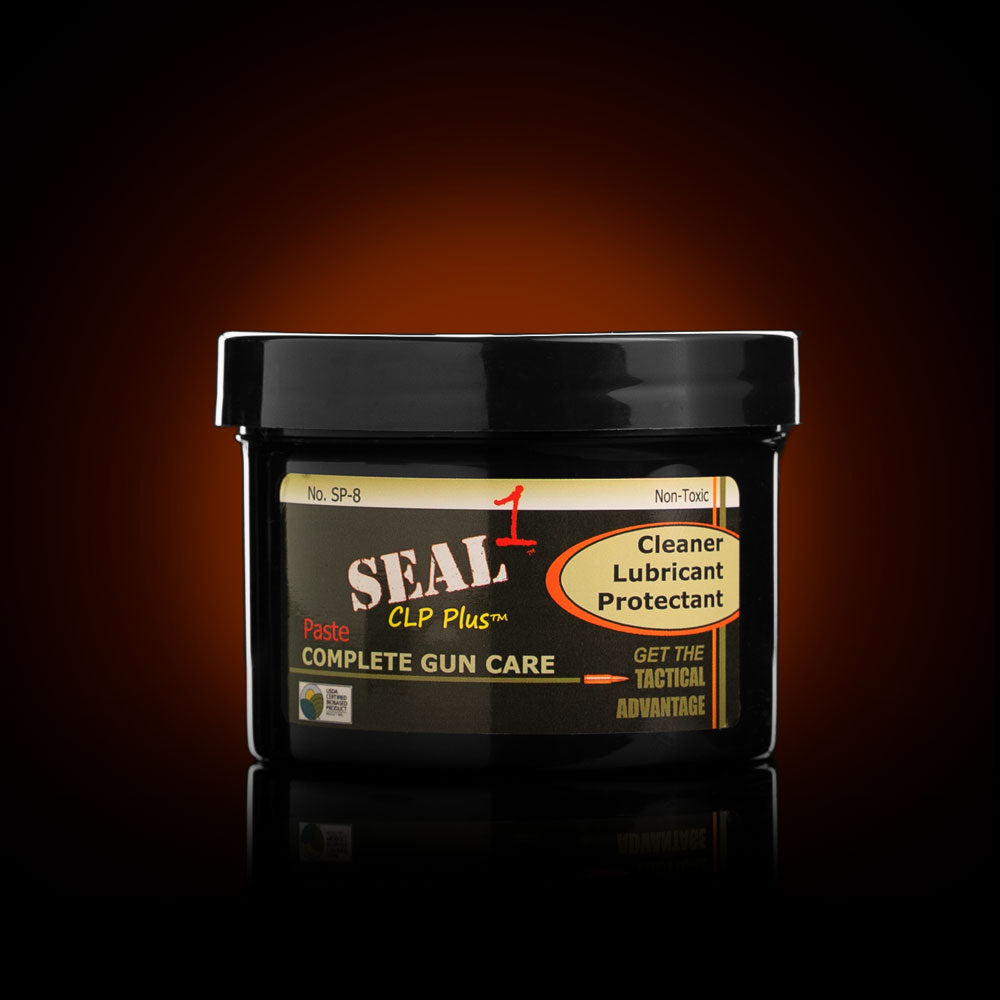
Humidity and temperature are the variables that decide whether a film holds. In a humid safe, moisture condenses on cold metal when the temperature drops, so a product with clear moisture-barrier claims and a dehumidified cabinet work together. In a dry climate, the risk shifts toward dust and handling wear, and a dry, wiped-down film is easier to maintain.
Application and removal guidance matters as much as the formula. Follow the manufacturer's instructions for coat thickness and wipe-down, and check compatibility with the specific metals, finishes, polymers, and wood on your firearm before applying. A light, fully wiped-down finish is usually the right approach for storage because a thick, sticky layer attracts dust and complicates the next cleaning. Watch out: leaving excess product wet can trap debris and make the next inspection harder, so wipe off the excess rather than leaving a heavy coat.
When comparing products, separate tested results from marketing claims. Look for safety documentation, intended-use statements, and limitations, and judge protection claims against the storage period and climate you actually have. A product that performs well in a humid basement may behave differently in a dry, heated safe, so match the claim to your conditions rather than assuming one formula fits every storage setup.
Traditional Gun Oil and Grease: Where Each Falls Short
Traditional gun oils and greases were formulated for single jobs, and that is where they fall short for long-term storage. A light petroleum or synthetic oil may lubricate well during active use, but its film can evaporate, migrate, or thin out over months, leaving steel exposed. A heavy grease may protect metal for a long storage period, but it collects dust and debris, can harden or separate in cold, and is harder to remove before the next use. Neither is inherently wrong; each is a trade-off that storage exposes.
Solvent-based cleaners add a separate concern. Many contain volatile organic compounds that you should not breathe in or leave on your skin, which makes a storage routine less comfortable and raises handling precautions. A non-toxic option removes that trade-off, though you should still follow the label, keep the work area ventilated, and observe skin and inhalation precautions. No product should be described as harmless without qualification; the honest standard is documented safety information and intended-use guidance.
Ingredient transparency is the gap most traditional products leave open. A label that lists active ingredients, carrier, and additives, plus clear handling precautions, lets you compare products on something other than marketing language. When a product does not disclose its ingredients, you cannot judge exposure risk or compatibility with finishes and polymers, so treat that absence as a limitation rather than a neutral detail.
Compatibility is the other practical test. Oils and greases can affect wood stocks, some polymer frames, and certain finishes differently, and a product that is safe on steel may stain or soften another material. Check the manufacturer's compatibility guidance for metals, finishes, wood, and polymers before applying, and test on a small, hidden area when the label is silent. Application and removal guidance should come from the manufacturer, not from habit.
Look for the same practical questions with any product: Does it protect for the storage period you need? Does it leave a clean, dry finish you can maintain? Is it safe to handle during routine checks? Does the label disclose enough to judge exposure and compatibility? A transparent comparison of protection claims, safety documentation, intended use, and limitations is more useful than a single "best" label, because storage conditions vary more than range conditions do.
Side-by-Side Comparison of SEAL 1 CLP Plus Formats and Bundles
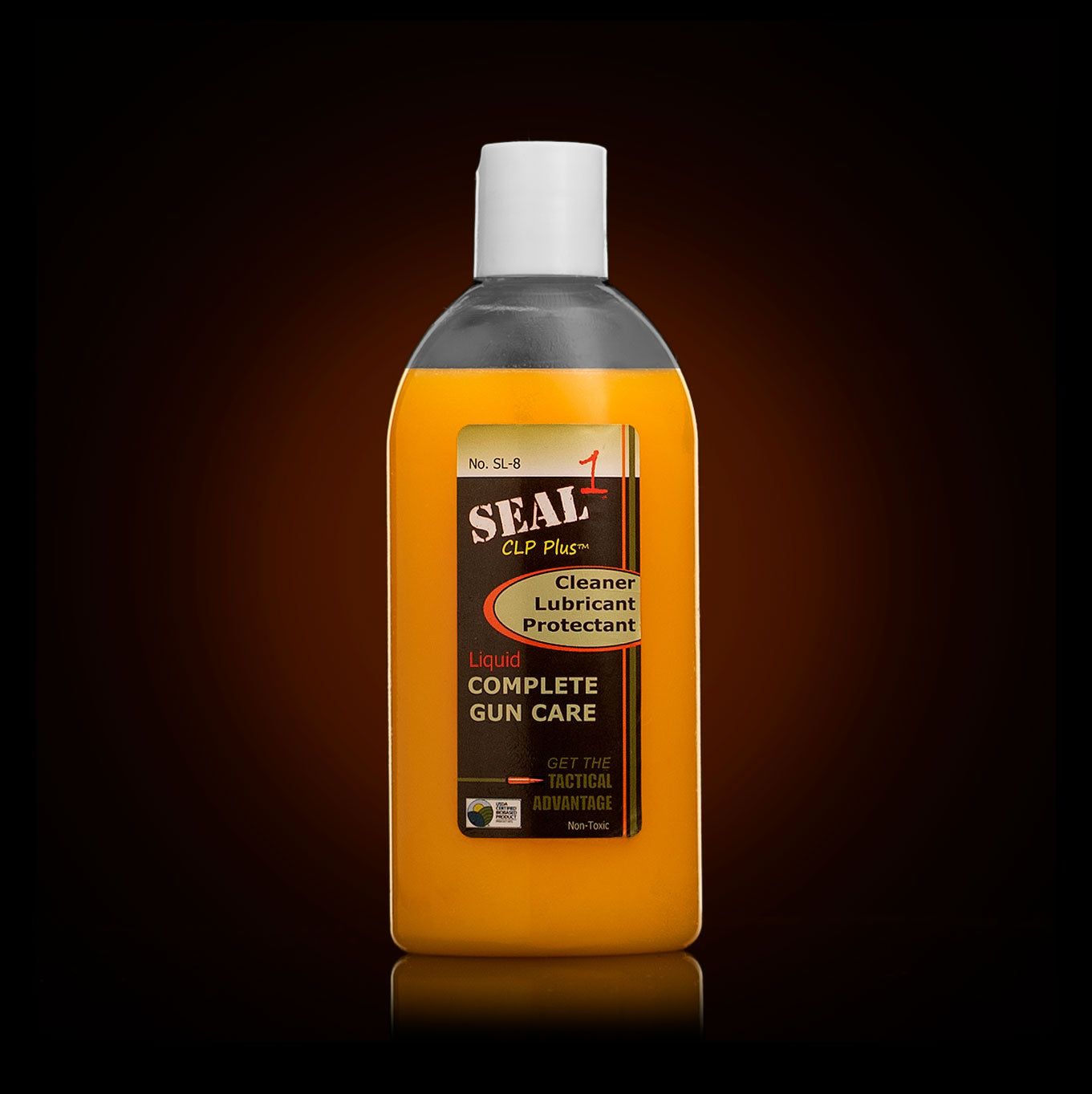
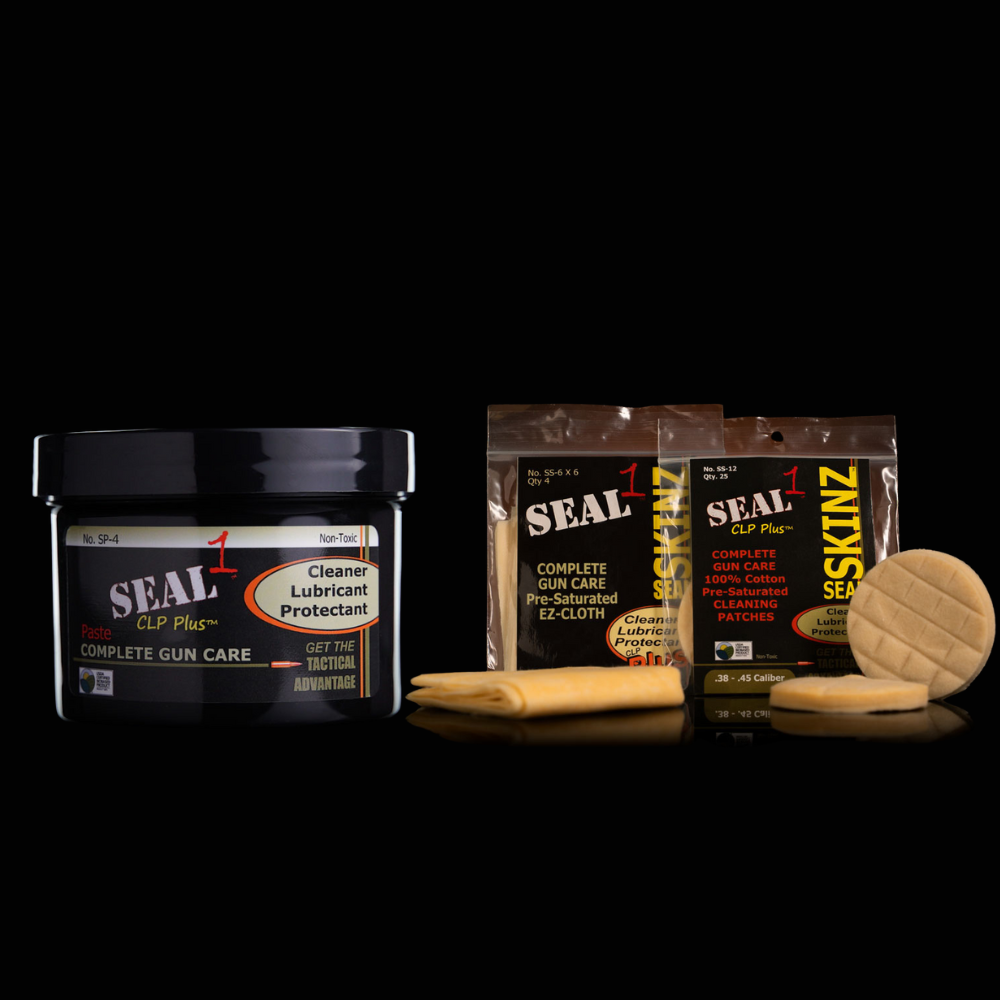
SEAL 1 CLP Plus® comes in several formats, so the right choice depends on how you clean and store your firearms. The product listings do not describe a performance difference between formats, and the brand notes that the liquid, paste and aerosol are the same product offered in different forms.
| Product | Format | Starting Price | Best For | Pros | Cons |
|---|---|---|---|---|---|
| SEAL 1 CLP Plus® Paste | Paste | $9.85 | Targeted cleaning and storage coating | Non-toxic, bio-based, made in the USA | Requires wiping off |
| SEAL 1 CLP Plus® Liquid | Liquid | $10.35 | Wide coverage on surfaces | Non-toxic, bio-based, made in the USA | Requires wiping off |
| Paste & Protect Power Pack | Paste plus SEAL SKINZ | $21.95 | Users who want cloths included | Bundled cloths for application | Higher upfront cost |
| Liquid & Lube Pro Pack | Liquid plus SEAL SKINZ | $27.50 | Users who want liquid and cloths | Bundled cloths for application | Highest price in this group |
| The Gun Rag | Pre-saturated microfiber cloth | $10.45 | Quick wipe-downs and storage prep | Reusable, safe on metal, plastic, wood and polymer | Limited quantity of product per cloth |
Starting Price
Best for: Owners who want a single, simple storage routine. Skip if: You need a large volume of product for a high-round-count shooting schedule.
How to Store Firearms Long Term With Non-Toxic Oil
Storing a firearm is about preparation as much as product. Follow a consistent routine so the protection holds across the storage period.
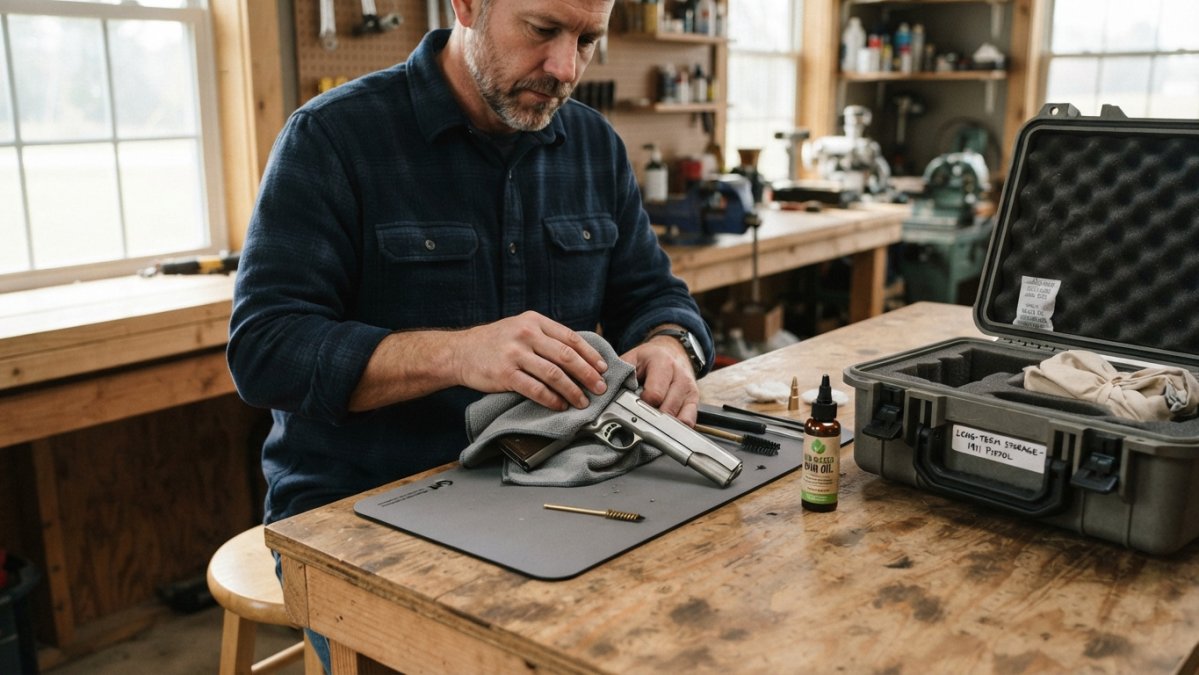
- Clean the firearm first. Remove visible fouling so the protective layer bonds to clean metal.
- Apply the product. Work a thin, even coat across metal surfaces, following the label instructions.
- Wipe off excess. SEAL 1 notes that its CLP Plus product performs best when fully wiped off.
- Store in a dry location. Humidity is a major driver of corrosion, so a dry safe or cabinet helps.
- Check periodically. Inspect the firearm at regular intervals and reapply as needed.
A common mistake is applying too much product and leaving it wet. Excess oil attracts dust and can make the next cleaning take longer. A thin, dry film is easier to maintain.
Choosing the Best Oil for Long-Term Gun Storage in Your Climate
Climate changes what you need from a storage product. In humid regions, moisture is the biggest risk, so prioritize a product with clear rust-prevention claims and store firearms in a dehumidified space when possible. In dry climates, the concern shifts toward keeping the surface protected from dust and handling wear.
If you store firearms in cold conditions, SEAL 1 offers a Below Zero CLP option described as a bio-based cold-weather gun oil for freezing conditions. It is sold in a 2 oz size. Check the listing before buying to confirm the product fits your storage environment.
For most owners, the decision comes down to three checks: Does the product protect against moisture? Does it leave a clean finish you can maintain? Is it safe to handle during storage checks?
SEAL 1 Below Zero CLP 2 oz is the product to consider for cold-climate storage.
Booking Your Next Storage Check: Stocking Up Your Cabinet Kit
A storage routine works best when your supplies are ready before you need them. Keep a paste or liquid, a cloth and a labeled container in the cabinet so you can complete a check in a few minutes.
Setting a recurring reminder for storage checks makes the routine easier to keep. Start with a basic kit.
Ready to build your kit? Shop SEAL 1 CLP Plus formats and bundles to find the storage option that fits how you clean and store your firearms.
Frequently Asked Questions
What is the best oil for long-term gun storage?
The best choice depends on how the firearm will be stored and how often it will be checked. For long periods in a climate-controlled safe, a thin protective film that resists moisture works well, and SEAL 1 CLP Plus is designed to leave a protective barrier on metal after cleaning. Wipe off excess so the surface is not left oily, since heavy residue can attract dust. Check stored firearms periodically and reapply protection when the finish looks dull or feels tacky. Match the product to your storage conditions rather than choosing on price alone.
Is non-toxic gun oil effective for long-term storage?
Non-toxic, bio-based formulas are designed to clean, lubricate, and protect in a single step, and SEAL 1 CLP Plus is described as forming a protective barrier against carbon, lead, and other residues. Effectiveness depends on proper application: clean the firearm first, apply a thin coat, and wipe off the excess. Storage conditions such as humidity and temperature swings also affect how well any protectant holds up. Inspect the firearm on a regular schedule to confirm the protection is still doing its job.
Can bio-based gun oil prevent rust during storage?
SEAL 1 CLP Plus is marketed as a rust preventive that protects metal surfaces when left as a thin film. Rust prevention relies on keeping moisture away from bare metal, so a clean, fully coated surface matters more than the amount of product used. Store firearms in a dry environment, use a desiccant where practical, and recheck the finish periodically. No protectant replaces good storage conditions, so treat the oil as one layer of defense.
Should I use a dry lubricant or a wet oil on a stored firearm?
SEAL 1 CLP Plus is described as a dry lubricant that performs best when it is completely wiped off, leaving a protective film rather than a wet coating. Wet oils can stay tacky, collect dust, and drip inside storage containers. A thin, wiped-down film suits most long-term storage, while heavier oil may suit specific mechanical needs. Choose based on whether you want a clean, low-residue finish or a thicker layer for a particular component.


