

Table of Contents
- Why Delicate Firearm Finishes Need Special Care
- What Makes a Non-Toxic Gun Cleaner Safer for Your Firearms
- SEAL 1 CLP Plus Liquid: Fast-Acting Carbon Removal
- SEAL 1 CLP Plus Paste: Precision Cleaning for Tight Spaces
- Pre-Saturated Patches and Cloths: Convenience Without Compromise
- How to Clean Blued Steel Firearms Without Damage
- Comparison Table: Choosing the Right Cleaner for Your Finish
- Selection Criteria: What to Look For in a Finish-Safe Cleaner
- Frequently Asked Questions
Last Updated: October 2, 2026
Why Delicate Firearm Finishes Need Special Care
Delicate firearm finishes, whether blued steel, Cerakote, polymer frames, or vintage patina, require a fundamentally different approach to maintenance than standard firearms. The best gun cleaner for delicate finishes isn't just about removing carbon and fouling; it's about doing so without stripping protective layers, causing corrosion, or altering the finish's appearance and structural integrity.
Most shooters don't realize that standard solvents can be aggressive enough to damage the very surfaces they're meant to protect. Acidic solvents pit blued steel over time. Harsh degreasers strip away protective oils that prevent oxidation. Water-based cleaners left to dry without proper lubrication invite rust formation within hours. The consequence isn't just cosmetic, compromised finishes expose bare metal, accelerate corrosion, and reduce your firearm's lifespan.
The solution isn't a trade-off between cleaning power and finish safety. A properly formulated cleaner, lubricant, and preservative system can do both: dissolve fouling on contact while leaving behind a protective barrier that strengthens the finish rather than weakening it.
What Makes a Non-Toxic Gun Cleaner Safer for Your Firearms
A non-toxic gun cleaner is a firearm maintenance product formulated without harsh chemical solvents, volatile organic compounds (VOCs), or toxic fumes that pose health risks during use or storage. Non-toxic cleaners rely on bio-based formulations that dissolve carbon, copper deposits, and lead buildup through chemical action rather than aggressive solvent strength.
The safety advantage extends beyond the shooter's lungs. Non-toxic formulas are safer for indoor range use, safer to store in homes with children or pets, and safer for the environment when disposed of properly. But here's what most guides miss: non-toxic doesn't mean weak. A properly engineered bio-based cleaner can match or exceed the cleaning power of traditional solvents because the chemistry is optimized for firearm-specific fouling, not general-purpose degreasing.
Shooters often worry that switching to non-toxic means compromising on performance. The reality is more nuanced. Non-toxic formulas excel at dissolving carbon and preventing corrosion. Where they differ is in how they interact with delicate finishes. Because they're gentler on metal surfaces, they're less likely to cause pitting or etching, exactly what you need when maintaining firearms with finish-sensitive construction. Maintaining the integrity of these surfaces extends beyond chemical selection, as preventing finish scratches also requires addressing the mechanical friction caused by daily carry gear.
pH-Neutral vs. Acidic Solvents: Which Protects Finishes
The pH level of a cleaner determines how it interacts with metal at the molecular level. pH-neutral cleaners maintain a pH around 7, meaning they neither add nor remove electrons from the metal surface. Acidic solvents have a pH below 7 and actively strip electrons from metal, which is why they're effective at removing stubborn fouling, but also why they damage finishes over time.
Blued steel is particularly vulnerable to acidic solvents. Bluing is a thin oxide layer applied to steel to prevent rust. Acidic cleaners dissolve this layer gradually, exposing bare steel underneath and creating pitting that becomes visible as small dark spots or rough texture. Once pitting starts, it accelerates because the exposed steel oxidizes faster.
pH-neutral solvents don't cause this problem. They clean through mechanical action and chemical affinity for specific fouling compounds, not through corrosive attack. For delicate finishes, pH-neutral is the safer choice. The trade-off is minimal, you may need slightly longer contact time or a bit more mechanical action (brush work), but the finish protection is worth it. For long-term storage cleaners especially, pH-neutral formulas prevent the slow degradation that acidic products cause over months or years.
SEAL 1 CLP Plus Liquid: Fast-Acting Carbon Removal
SEAL 1 CLP Plus Liquid is a bio-based, non-toxic cleaner, lubricant, and preservative formulated to dissolve carbon on contact while leaving behind a protective barrier against copper, lead, and further carbon accumulation. At $10.35 per bottle, it's priced competitively with traditional solvents but delivers the finish-safe performance of premium products.

The liquid formulation works best for general firearm maintenance and field cleaning. Apply it to carbon-fouled areas, work it in with a brush or patch, then wipe off completely. Because SEAL 1 CLP Plus is a dry lubricant that performs best when completely wiped off, you get the cleaning action without residual buildup that can attract dust or debris. This is critical for delicate finishes, residual product can trap moisture or create uneven coating that alters appearance.
What sets the liquid apart is its speed. Carbon dissolves noticeably, reducing the need for aggressive scrubbing that can wear on finish details or engravings. The bio-based formula infuses into metal for long-term protection, meaning the protection continues after you've wiped the surface clean. For shooters who clean between range sessions or after storage, this liquid is the go-to choice.
The one limitation: the liquid consistency makes it less ideal for tight spaces like bolt lugs or recessed areas where paste would sit longer and work more thoroughly. For those applications, consider the paste formulation or pre-saturated patches.
SEAL 1 CLP Plus Paste: Precision Cleaning for Tight Spaces
SEAL 1 CLP Plus Paste offers the same non-toxic, bio-based formula as the liquid but in a thicker consistency designed for precision work. At $9.85 per container, it's the most affordable option in the SEAL 1 lineup and the best choice for detailed cleaning of areas where liquid would run off.

The paste formulation excels at bore cleaning, bolt face maintenance, and working into recessed areas like safety levers or trigger mechanisms. Apply the paste, let it sit for 30 seconds to a minute to allow the solvents to work, then scrub gently with a brush or patch.
Pre-Saturated Patches and Cloths: Convenience Without Compromise
Pre-saturated patches and cloths eliminate the mixing step and reduce mess, making them ideal for range sessions, field cleaning, or shooters who prioritize convenience. SEAL 1 offers two options in this category: SEAL SKINZ Pre-Saturated Patches at $8.99 and The Gun Rag microfiber cloth at $10.45.

The Gun Rag: Microfiber Protection for All Finishes
The Gun Rag is a premium microfiber cloth pre-saturated with SEAL 1 CLP Plus. Microfiber's ultra-soft structure lifts carbon and fouling without the mechanical wear that traditional cotton can cause. This matters for delicate finishes, microfiber fibers are finer than cotton, so they clean effectively without abrading finish details or polished surfaces.
SEAL SKINZ Patches: Cotton Flannel for Bore Cleaning
SEAL SKINZ Pre-Saturated Patches are made from double-napped 100% cotton flannel pre-saturated with SEAL 1 CLP Plus Paste. At $8.99, they're the most affordable pre-saturated option and ideal for bore cleaning, where cotton's absorbency and slight texture are actually advantageous. Cotton fibers grip fouling particles effectively, and the double-napped construction maximizes surface area for cleaning contact.
How to Clean Blued Steel Firearms Without Damage
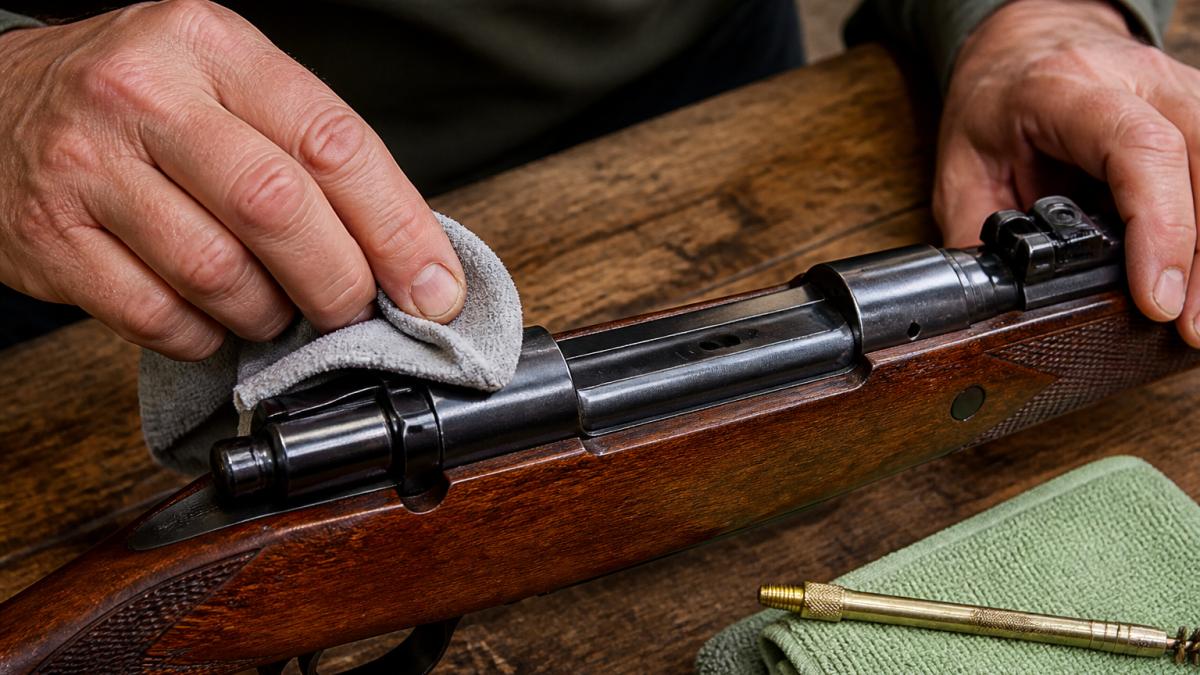
Blued steel is one of the most finish-sensitive firearm surfaces because the bluing is a thin oxide layer that sits on bare steel. Once compromised, bluing doesn't repair itself; you either live with the damage or have the firearm reblued, which is expensive and removes original factory finish.
Comparison Table: Choosing the Right Cleaner for Your Finish
| Product | Type | Price | Best For | Key Advantage |
|---|---|---|---|---|
| SEAL 1 CLP Plus Liquid | Liquid | $10.35 | General cleaning, speed | Fast carbon dissolution, complete wipe-off |
| SEAL 1 CLP Plus Paste | Paste | $9.85 | Tight spaces, bore detail | Precision application, longer dwell time |
| The Gun Rag | Microfiber cloth | $10.45 | Delicate finishes, reusable | Gentle on finish, reduces scratching risk |
| SEAL SKINZ Patches | Cotton patches | $8.99 | Bore cleaning, disposable | Affordable, caliber-specific sizing |
Selection Criteria: What to Look For in a Finish-Safe Cleaner
1. pH Balance Neutral or slightly alkaline pH (7-8.5) protects blued steel and vintage finishes. Acidic solvents (pH below 7) cause pitting over time. Check the product specifications or contact the manufacturer, reputable companies publish this data.
Frequently Asked Questions
What is the best gun cleaner for blued steel firearms?
A non-toxic, pH-neutral gun cleaner like SEAL 1 CLP Plus is ideal for blued steel. Blued finishes are vulnerable to acidic solvents and harsh chemicals that can pit or discolor the metal. SEAL 1's bio-based formula dissolves carbon and fouling on contact without stripping the protective bluing layer. Apply, work it in gently, and wipe completely to leave a protective barrier against corrosion.
Can harsh solvents damage custom firearm finishes?
Yes. Acidic and petroleum-based solvents can pit, discolor, or strip custom finishes like Cerakote, bluing, and polymer coatings. They can also cause oxidation in delicate metals. Non-toxic cleaners formulated with pH-neutral chemistry are safer because they dissolve fouling without attacking the finish itself. Always test any new cleaner on an inconspicuous area first, especially on antique or rare firearms.
What is the difference between CLP and a traditional solvent-based cleaner?
CLP (Cleaner, Lubricant, Preservative) combines all three functions in one product, reducing the number of chemicals you handle. Traditional solvent-based cleaners often rely on harsh petroleum distillates that can damage delicate finishes. Bio-based CLPs like SEAL 1 CLP Plus use gentler chemistry while still dissolving carbon, copper deposits, and lead buildup. It simplifies maintenance and reduces chemical exposure.
How often should I clean firearms with delicate finishes?
Frequency depends on use. Competitive shooters may clean after each session to remove carbon and fouling buildup. Casual shooters can clean every 100-200 rounds or monthly if stored. For long-term storage, a thorough cleaning followed by a protective coating prevents oxidation and corrosion. Always clean firearms before extended storage, regardless of finish type, to remove acidic residues from primers and powder that accelerate rust.


